EST. 2009

showing posts filed under: photography
Showing posts with label photography. Show all posts

January 16, 2020

That Eye of Love


PHOTOGRAPHED IN TWO FRENCH CITIES, a year apart, photographer René Groebli's honeymoon photoessay feels very much like it may have been captured in a single hotel, over a single weekend. Dressing and undressing, with a dash of empty, communal spaces, the scenes provide an intimate glimpse into Mr. and Mrs. Groebli's private, poetic Paris and Marseille.

Published as a book entitled The Eye of Love, the collection of 25 photographs isn't meant to document, but rather to convey atmosphere, emotion and sensuality. Considered among the elite of Swiss post-war photographers, Groebli's work ranges from tender to exploratory, spanning nearly eight decades of capturing and compositing images.

I love how natural and artificial light in the shots suggest a feeling of being in a space and time warp, of day and night blending together. Honeymoon bliss.

The Eye of Love by René Groebli, renegroebli.ch

April 18, 2019

That Floral Fix


AMONG ART'S FAVORITE MUSES, FLOWERS HAVE BEEN A PROMINENT SUBJECT of artistic works across history. From ancient Egyptian ceramics, to medieval tapestries and impressionist paintings, flora features heavily in precious and iconic works. “It is maybe to flowers that I owe becoming a painter.” said Claude Monet, who is famed for his Water Lilies series.

In more contemporary times, flowers inspire an even wider range of artistic applications. Andy Warhol's Flowers is a quadriptych of silkscreen prints in kaleidoscopic colors. Jeff Koons' Large Vase of Flowers is a polychromed wood sculpture of a Renaissance-style bouquet.


Monet's Water Lilies, Andy Wharhol's Flowers, and Jeff Koons' Large Vase of Flowers


Still life depictions of flowers, however, continue to be one of my favorite floral genres. Its simplicity places less of a focus on concept, and more on composition, color, light and the quality of flowers as they are painted or photographed.

I'm currently feeling Britta Walsworth's fresh, fashionable floral designs. Looking elevated from the commercial bouquet without being avant-garde, her compositions have a tousled vibe to them while comprising sprigs and blooms in immaculate condition.

Floral design by Britta Walsworth, thesecolours.tumblr.com

April 12, 2018

That Invitation to View


SAUL LEITER WAS ONE OF THE FIRST PHOTOGRAPHERS TO CAPTURE NEW YORK CITY IN COLOR, but as there was no art market for color photos at the time, he made a living as a fashion photographer for such titles as Elle, Harper's Bazaar, and British Vogue. His work differed from other commercial images of the period, with products' and models' faces partly obscured or out of focus. This elusive quality set his photos apart, inviting the viewer in with their mystery and visual abstraction.

“A window covered with raindrops interests me more than a photograph of a famous person,” Leiter says in the 2014 documentary In No Great Hurry. His photographs often feature passers-by glimped through doorways, reflected in windows, or concealed by layers of foreground obstructions. They never blatantly present a subject, and rather take their time to unveil mood, setting, and narrative, with rich yet hazy detail. There's something new to see each time you look.

Leiter was considered a member of the esteemed New York School of photographers, along with Dianne Arbus and Richard Avedon, but he was always an outsider. Throughout his career, he experienced cyclically being forgotten and rediscovered, expressing contentment of the fact: "Being ignored is a great privilege. That is how I think I learned to see what others do not see and to react to situations differently."

A most elegant attitude to being overshadowed.

Photographs by Saul Leiter, images from artnet.com

December 20, 2017

Those Ballet Beginnings


BEFORE STARTING HER ACTING CAREER, BRIGITTE BARDOT WAS AN ASPIRING BALLERINA. She took lessons three days a week at a dance studio in Paris' 16th arrondissement, and by age 13 was accepted to the Conservatoire de Paris.

There, Brigitte attended classes taught by Boris Knyazev, a ballet dancer and choreographer who trained prima ballerina and 1964 Légion d’Honneur honouree Yvette Chauviré. Brigitte did not come to the same status in ballet, instead becoming an actress, singer, and model of international fame.

Over three decades, Brigitte appeared in 47 films, and released over a dozen albums and singles, before retiring from entertainment. She has since dedicated herself to animal activism, and was named a Chevalier of the Légion d'Honneur in 1984 for her efforts. Brigitte however refused this honor, claiming that the awarding government permitted the cruel and inhumane treatment of animals.

And what of the young ballerina Brigitte? Though she did not pursue ballet, Brigitte contributed to bringing some of its essence to everyday fashion. She asked Rose Repetto, a dancer and founder of her namesake ballet shoe company, to create something as soft, comfortable, and flexible as a ballet shoe.

In 1956, Repetto released the Cendrillon: a ballet-inspired shoe of lasting appeal, widely replicated by brands and manufacturers the world over. To this day, the French brand celebrates the shoe's origin story, paying tribute to the world-renowned multi-hyphenate who once aspired to be a ballerina.

Brigitte Bardot photos by Walter Carone. Images from mashable.com

August 16, 2017

That Moment's Rest


THERE'S A MEMORABLE SCENE IN THE 2002 FILM FRIDA in which actresses Salma Hayek and Ashley Judd engage in a seductive dance. It was at a party hosted by Judd's character, photographer Tina Modotti, who was a prominent figure in the avant-garde circles of 1920s Mexico. She also photographed the image above.

An Italian immigrant attracted to the performing arts, Modotti worked as an actress and model in California, appearing on stage, as well as in film. She met photographer Edward Weston in Los Angeles, who became her lover and photography mentor. The two opened a portrait studio in Mexico City, where Modotti also photographed many of the murals painted by Diego Rivera and José Clemente Orozco.

While Weston's photographs were more abstract in style, Modotti's images were influenced by her political views, and her sympathy towards the peasant class. One of her most recognized photographs feature an anonymous worker's hands, resting on a tool. The powerful image captures a pause from hard labor, while suggesting the imminent resumption of work. This particular photograph has been exhibited across Mexico and the United States since 1995, after the re-discovery of Modotti's prints shined a new light on her legacy. In 2013, the photo was shown at London's Royal Academy of Arts.

Beyond photography, Modotti was an activist for the Comintern, spending over a decade entangled in murder investigations and exile. In 1939, she returned to Mexico under a pseudonym, and in 1942, died from heart failure on her way home from a dinner at poet Pablo Neruda's home. He composed her epitaph: Pure your gentle name, pure your fragile life; bees, shadows, fire, snow, silence and foam; combined with steel and wire and pollen to make up your firm and delicate being.

Modotti's body of photographic work reflects two distinct periods in her career, which have been described as romantic, and revolutionary. I personally think photographs from both periods share a certain tranquility. You wouldn't expect it after reading about Modotti's tumultuous involvements, but passion can take many forms across an individual's varied pursuits. As in Neruda's tribute, Modotti was both a firm and delicate being.

Hands resting on tool by Tina Modotti, getty.edu

June 26, 2017

That Architect of Fashion


THERE WEREN'T MANY JOBS FOR YOUNG ARCHITECTS IN 1960S ITALY when Gianfranco Ferré got his degree. He designed accessories for a living; an unplanned step into the fashion industry where he would eventually start his own label, and also become artistic director at Christian Dior. It was deemed controversial at the time for a non-French designer to lead a Parisian house, but Ferré's impeccable craftsmanship and innovative approach to design made him a fitting choice for the luxury brand. His creations reflected a strong architectural influence, earning him such titles as “architect of fashion” and “Frank Lloyd Wright of fashion”.

Ferré became well known for designing an array of white women's shirts that strayed from traditional patterns. He took the iconic garment, reinvented its proportions, and produced pieces that required masterful techniques. In 2015, eight years after his passing, the white shirts received a tribute through an exhibition by Milan's Palazzo Reale, the Gianfranco Ferré Foundation, and the Prato Textile Museum. La Camicia Bianca Secondo Me, or "The White Shirt According to Me" gathered and displayed drawings, photographs, installations and advertising that represent and celebrate two decades of the designer's creativity.

Among the display items were photographs by Leonardo Salvini, whose x-ray simulations of Ferré's white shirts highlighted their technical perfection. Exposing every pleat and seam, the images present the shirts from an almost architectural, blueprint-like perspective, rendering them both structural and delicate at once.

Fittingly iconic photographs of an equally iconic subject matter, Salvini's images romance both Ferré's original field of study, as well as his fashion legacy. They inspire me personally for the triumph they represent, of turning an otherwise failed attempt at a career in architecture, into one of the most celebrated fashion perspectives of the late 20th century.

Photographs of Gianfranco Ferré shirts by Leonardo Salvini, mostra.fondazionegianfrancoferre.com

August 17, 2015

That World Apart


"THE ONLY THING THEY DEMANDED WAS TO HAVE THE RIGHT TO BE THEMSELVES, not to be forced to deny or repress their feelings, to have the right to live their own lives, to be responsible, to be at ease with themselves." wrote Christer Strömholm of his friends, "les amies" of Paris' Place Blanche. In a world of night and neon light, Strömholm photographed these friends, transvestite prostitutes, with an old Leica, a few films and whatever light was available. The pictures reveal that Strömholm photographed them with tenderness too. He cared for these "night-birds" and evidently had their trust.

The year was 1959, six years before the term "transgender" would be coined by Psychiatrist John F. Oliven. The scene was Place Blanche, where the Moulin Rouge stands. It was different back then; "the Paris of Montmarte that had not yet been painted with the gloss of Amelie." explained Christian Caujolle, who wrote the foreword for Strömholm's book on the subject. Place Blanche was where boys from Normandy, North Africa and the south of France fled to escape their often hostile homes, to live as women in the wee small hours when police control was less frequent. Earning 60 francs daily at cabarets, which covered no more than food and board, working as prostitutes allowed them to save the money they would need for their gender transformation. Unfortunately, few realized their aspiration.

Strömholm's subjects exhibit glamor and sometimes humor in the photographs, in spite of the alienated lives they led. "My friends and I lived together in a world apart. A world of shadows and loneliness, anxiety, hopelessness and alienation." In his book Les Amies de Place Blanche, Strömholm tells of adopting these women's routine, of early afternoon breakfasts and carrying out the days at night. He may not have shared their experience of mismatched gender identity, but his poignant chronicle of their time on Place Blanche presents something that the rest of us can emulate: non-discriminating friendship.

It's quite simple. Friendship overlooks gender, as it does age, social class, religion or ethnicity. When stripped of surface biases, what we are drawn to when we are drawn to befriend people normally have little to do with their gender, age or religion, and more to do with their humor, flair, kindness, intelligence or strength. If there are things we struggle to understand, it's worth acknowledging that we don't always fully understand our friends anyway. Why do they say what they say? Why do they do what they do?

Strömholm's photographs reveal the beauty of camaraderie. Perhaps we can learn a thing or two from his example, to offer friendship in place of rejection, and in spite of things we have yet to understand. If we valued people's hearts and minds more than their material parts, less of us would need to live in a world apart.

Les Amies de Place Blanche by Christer Strömholm, images from stromholm.com

June 5, 2014

That Voyage Fantastique


SOMEONE ONCE ASKED ME WHETHER I "PHOTOSHOP" MY PHOTOS, which was a tricky question to answer given the broadness of the term and the stigma associated with it. On the one hand, there is enhancement. On the other hand, there is manipulation. While the former refers mainly to the cropping, corrections or adjustments made to the color, contrast, noise or orientation of an image, the latter makes "visual fiction" of a photograph, as astrophotographer Jerry Lodriguss so perfectly described it in his piece on digital manipulation ethics. Worth a read!

As much as I'd love to discuss enhancement vs. manipulation, the ethics and aesthetics surrounding the post-processing of images, not to mention the subjective human influences that naturally go into photography to begin with, I write this post in celebration of this so-called visual fiction. At least the artistic kind. Photoshop Trolling and Pic Pedantry aside.

Born in 1988 in France, Maia Flore belongs to a generation of artists today whose "images are constructed and captured in equal parts." Art critic and historian Martine Ravache is eloquent about it but put bluntly, these artists' work basically include post-processing or "Photoshopping." In Maia's recently-exhibited Le voyage fantastique, her photographs are truly fantastique, setting surreal scenes in breathtaking French locales. My favorites of the set feature a girl levitating in a stunning Thermes du Mont-Dore hallway, another clad in crimson at Bordeaux's Miroir d'eau, and yet another seemingly adding or removing crosses from the Opéra Royal de Versailles stage curtain.

Le voyage fantastique was commissioned by Atout France and Institut Français, who granted Maia carte blanche to carry out the project. The series journeys through 25 French heritage sites; a blithe and beautiful voyage completed by the artist in 66 days. Myself having visited both Bordeaux and Versailles, I am aware that Maia's photos are not only enhanced, but thoroughly manipulated and even meticulously staged. But they do not render their locations any less real. Miroir d'eau may as well look that surreal for a split second in reality, when they turn on the mist.

Back to whether or not I Photoshop my photos, the answer is: not enough apparently. Cropping, rotating, adjusting curves, color and contrast might remedy mediocre shots, but is there any reason why our personal photos can't aim to be as magical as Maia's?

Le voyage fantastique by Maia Flore, www.maiaflore.com

June 5, 2013

That Shift in Spirit


TO BE SPIRITED IS TO BE FULL OF ENERGY. Energy to exert and energy to endure. I woke up late, languid and lazy on a hungover first of June, thinking to myself that on this month, half the year would have gone by. Sustaining the thought, I wasted the rest of the morning anyway, melding with the sheets, checking and rechecking social feeds; perhaps the worst habit I've developed in the past year.

It was time to get up, get the rest of the day, and year, going. To inspire some energy into my mid-year crisis of sorts, I turn to an art form that exists by its very spiritedness, characterized by emotional intensity, maturity and expressiveness. Only once have I been to a proper tablao -definitely not counting the choreographed tour group shows- so I travel into the inner circles of Flamenco life through Gilles Larrain's Flamenco photography series begun in 1983.

"Flamenco: Landscape of its Soul" depicts some of the genre's contemporary figures, both in Larrain's New York studio and in Seville, where the tradition-interspersed-with-daily-life first enthralled him. The gelatin silver prints are of very limited editions, printed by Larrain himself and continuously compiled for future plans of publication.

Beyond stills, however passionate, I believe no experience of Flamenco is complete without the toque, cante and baile beheld in audio-visual glory. Here, Antonio Gades and Cristina Hoyos lead my spirited, vigorous stamping through the second half of an almost sluggish year.


"Flamenco: Landscape of its Soul" by Gilles Larrain, www.gilleslarrain.com Images from www.behance.net/Larrain Antonio Gades and Cristina Hoyos from Carlos Moya Danza Teatro

February 26, 2013

That Show of Hands


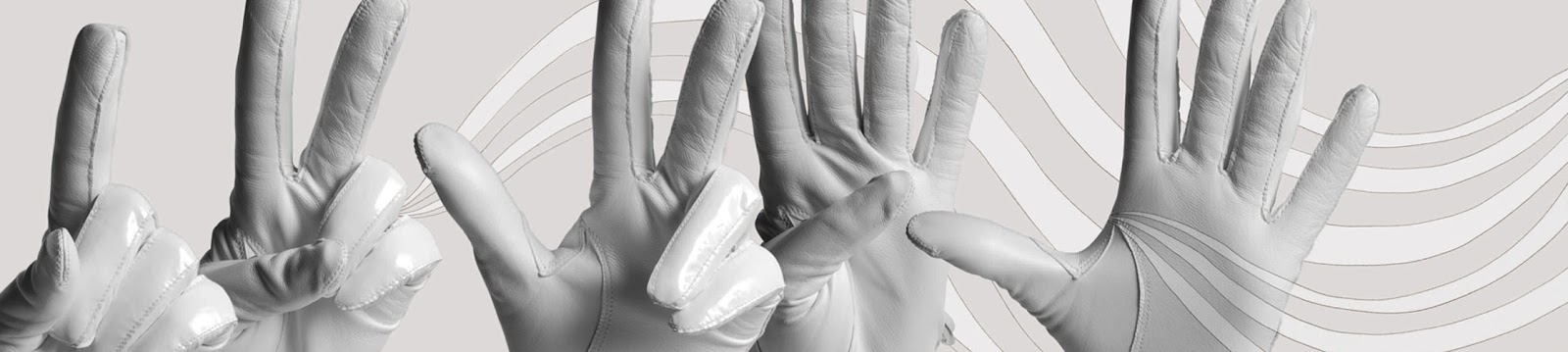
A SIMILAR SENTIMENT. I'd been in love with Gildo Medina's photography + illustration mashup for the Maison Fabre catalogue since, well, since I first saw it years ago. Reminiscent of the treatment, Delfina Delettrez's spring/summer campaign by Philippe Jarrigeon highlights colorful products by setting them against washed-out greys and isolated body parts.

In all areas of visual art and design, similarities are bound to exist between completely unrelated materials, developed by entirely unrelated teams. Blatant copying aside, the key, I think, is in execution. Something done well, however many times, by however many individuals, is still a welcome sight.

I've seen this before. I think to myself. But if it's interesting, I don't mind seeing it again.

Maison Fabre catalogue by Gildo Medina www.gildomedina.net Delfina Delettrez s/s 2013 campaign by Philippe Jarrigeon, philippejarrigeon.com
« NEWER OLDER »